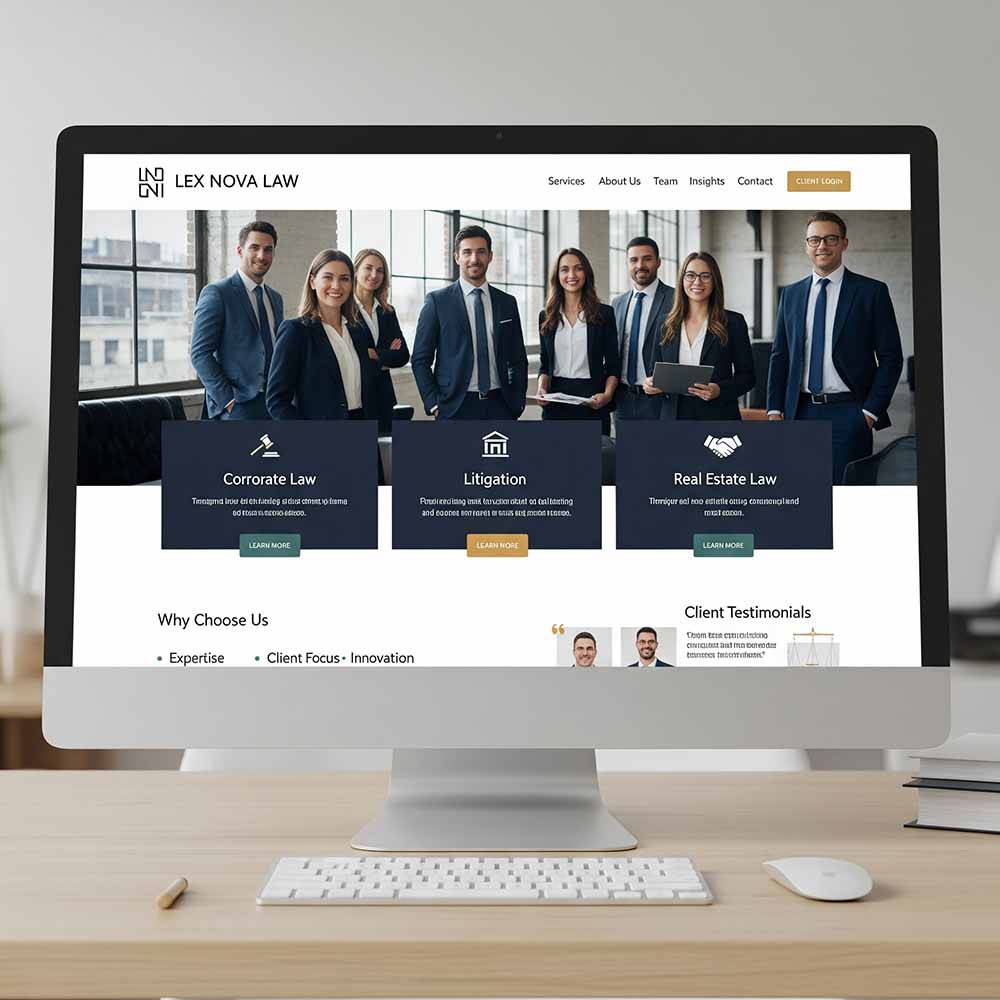
Take a moment to step into the shoes of a potential client looking for legal help. They've just searched for a lawyer online and found your website. What’s their first impression? Do they see a modern, professional space that inspires confidence, or a digital relic that looks like it was built in the early 2000s?
In Canada's increasingly competitive legal market, your website is no longer just an online brochure. It's a critical tool for building trust, showcasing your expertise, and attracting new business. A strategic web design and content plan can help a solo practitioner or small firm look as established and professional as a large, corporate firm. Your website is an investment in your practice’s long-term growth.
This article will show you how to leverage your online presence to achieve three key business goals: looking credible, getting more clients, and saving valuable time.
Section 1: The Design Elements of a Credible Website
A credible website starts with a polished and professional look. The visual design of your site is the first thing a visitor notices, and it sets the tone for your entire practice.
Professional, Clean Aesthetics
Avoid the temptation to use cluttered layouts or generic stock photos. A professional law firm website should feature a clean, minimalist design with a consistent colour palette that reflects your firm's brand. Invest in high-quality, professional headshots of you and your team. This personal touch builds a sense of human connection and trustworthiness that a generic photo simply can't.
Intuitive User Experience (UX)
Clients visiting your site are often in a stressful situation. An intuitive user experience helps them find the information they need quickly and easily. A logical site structure with a clear menu and quick access to key pages—like "Our Services" and "Contact Us"—reduces frustration and keeps them from leaving your site in search of a simpler alternative.
Mobile-Friendly Design
In today's world, most people are searching for information on their phones. If your site isn't optimized for mobile, you are telling potential clients that you are behind the times. A mobile-friendly law site ensures that your website looks and functions perfectly on any device, from a desktop computer to a smartphone. This is no longer a luxury—it’s a non-negotiable for professionalism and credibility.
Section 2: Content That Establishes Your Expertise (And Gets You Found)
Once you've captured a visitor's attention with a professional design, you need to prove your value. This is where strategic content comes in.
The Power of a Legal Blog
A blog is a powerful tool for demonstrating your legal knowledge. It's how you show, not just tell, that you are an expert in your field. By writing about common legal issues and answering the questions your clients are already asking, you establish your authority and position yourself as a thought leader. It's an excellent way to provide value before a client even picks up the phone.
Essential Pages that Build Trust
Certain pages on your site are non-negotiable for building trust.
• Attorney Bios: Your bio page is your chance to connect with clients on a personal level. Include a professional headshot, details on your education, years of experience, and any certifications or awards.
• Practice Area Pages: Clearly outline your services and explain them in simple, accessible language. Avoid legal jargon and focus on how you can solve your clients’ problems.
• Client Testimonials & Case Studies: Showcasing success stories and positive feedback provides social proof of your abilities. This helps potential clients feel confident in your services and demonstrates your track record.
Legal SEO for Visibility
Having great content isn’t enough if no one can find it. Legal SEO is the process of optimizing your site to rank higher in search engine results. By incorporating strategic keywords into your content, you can attract qualified leads who are actively searching for the services you provide. This is especially crucial for a Canadian-based solo or small firm trying to compete with larger firms on a local level.
Section 3: Features That Convert Visitors into Clients
Once a visitor is convinced of your expertise and credibility, your website needs to make it easy for them to take the next step.
Clear Calls-to-Action (CTAs)
A strong website guides visitors toward a desired action. Clear calls-to-action (CTAs) like "Schedule a Consultation," "Get a Free Quote," or "Download Our Guide" should be strategically placed throughout your site. These buttons make it simple for a potential client to connect with you, ensuring you don't miss an opportunity.
Integrated Client Intake Forms
For a busy professional, time is money. A secure, online client intake form streamlines the initial process, allowing you to gather essential information before the first meeting. This not only makes your practice more efficient but also signals to clients that you are organized and professional.
Making Contact Simple
Beyond a phone number, your website should feature a prominent contact form, email address, and physical office location. This information adds another layer of credibility and makes it easy for potential clients to get in touch in whatever way they feel most comfortable.
Conclusion: Your Website as a Strategic Asset
A well-designed, functional, and authoritative website is an essential investment in your Canadian law practice. It's your digital office—a space where you can make a powerful first impression, establish your expertise, and convert visitors into clients.
When you're ready to make that investment, knowing how to choose a web designer for your law firm becomes the most important decision. Don't settle for a generic template. Choose a partner who understands your business goals and can deliver a site that not only looks professional but works as hard as you do to grow your practice.